Welding supplies By Antoh Decor Enterprises 3 min read
Key points
- E6013 is a general-purpose rutile electrode for mild steel, easy to strike, with a smooth arc and easy slag removal.
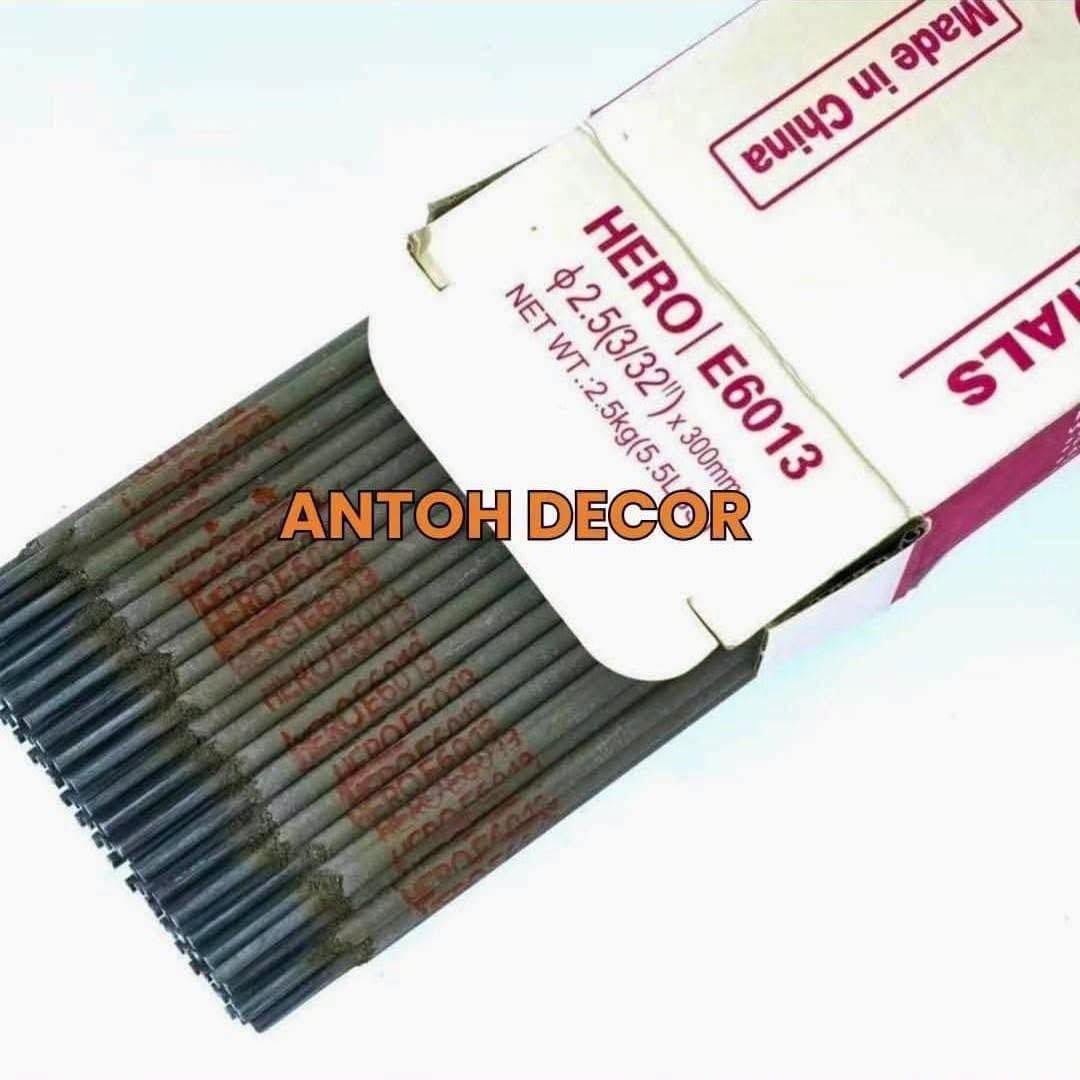
- Use 2.5 mm for thin sections and decorations; 3.2 mm for general fabrication and thicker joints.
- Typical current is roughly 60–90 A for 2.5 mm and 90–130 A for 3.2 mm; always check the packet.
- Keep rods dry and sealed; damp rods cause porosity and a poor arc.
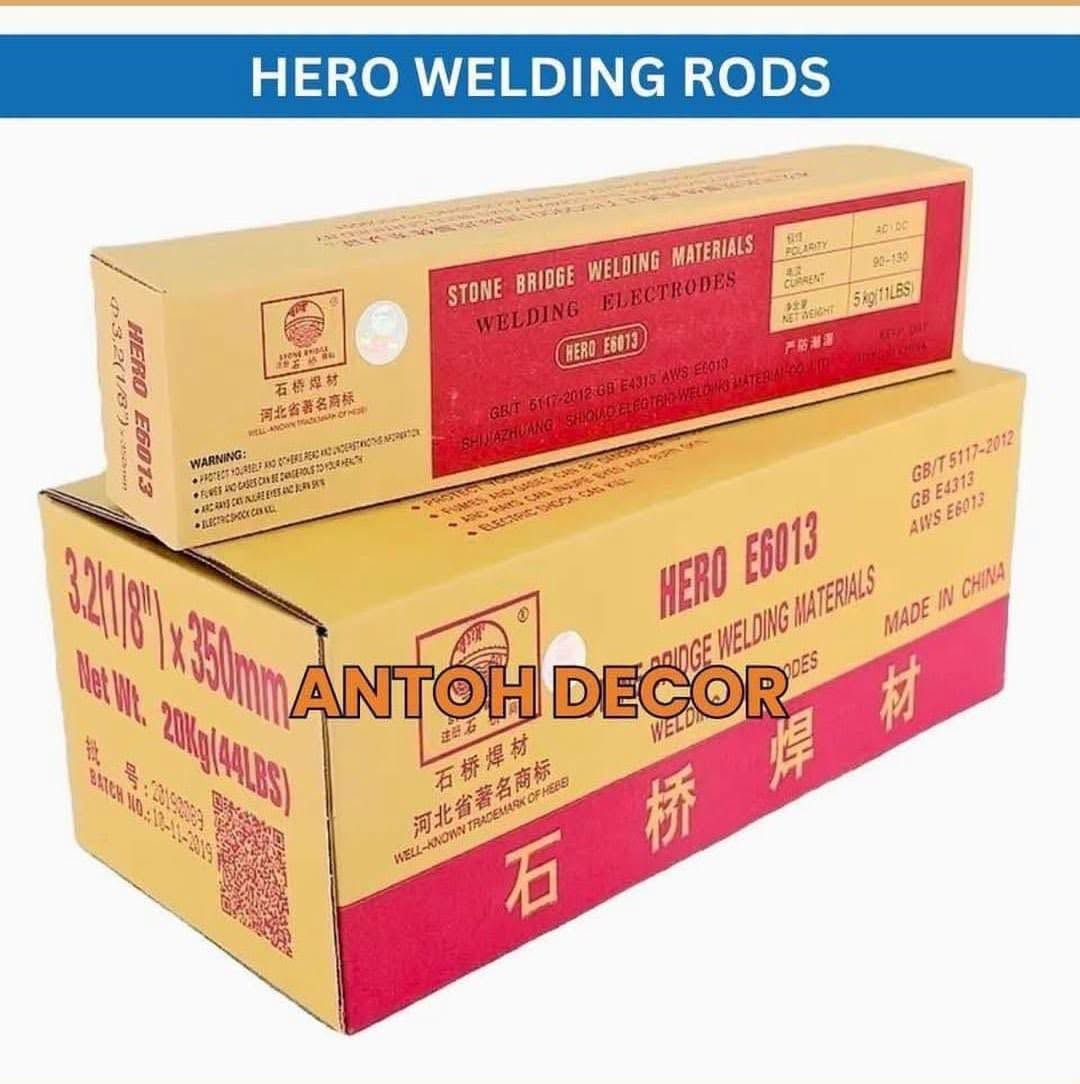
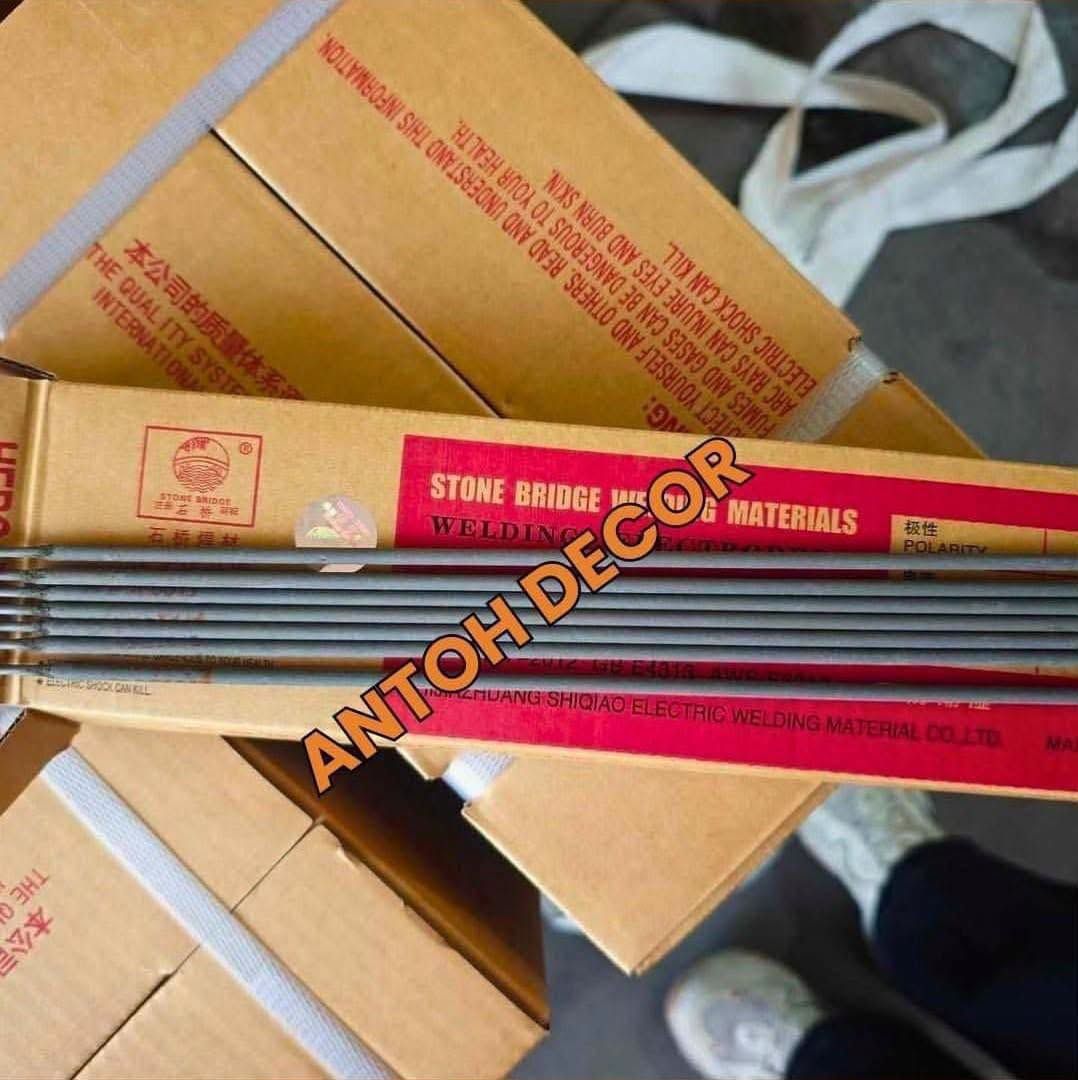
Walk into any welding workshop in Kenya and you will find E6013 welding rods. They are the everyday electrode for gates, grills, burglar-proofing and general mild steel work. We stock Hero E6013 rods in 2.5 mm and 3.2 mm, by the packet and by the 20 kg carton.
What does E6013 mean?
- E means it is an electrode for arc welding.
- 60 refers to the minimum tensile strength of the weld metal (60,000 psi).
- 1 means it can be used in all welding positions.
- 3 describes the coating (rutile) and the current: it runs on AC or DC.
In practice: E6013 strikes easily, gives a smooth, stable arc, leaves a neat bead and the slag chips off easily. That makes it ideal for decorative work where the weld is visible.
2.5 mm or 3.2 mm?
| Diameter | Typical current* | Best for |
|---|---|---|
| 2.5 mm (3/32″) | about 60 – 90 A | Thin sheet, decorations, ornaments, light grills |
| 3.2 mm (1/8″) × 350 mm | about 90 – 130 A | General fabrication, gate frames, thicker joints |
*Typical ranges for E6013. Always follow the recommendation on the packet and adjust for your machine, joint and position.
Storage: keep them dry
Electrode coatings absorb moisture. Damp rods spit, stick, and leave porous, weak welds. To keep rods in good condition:
- Keep packets sealed until you need them.
- Store cartons off the floor, in a dry place, away from rain and condensation.
- If rods have become damp, follow the manufacturer’s drying instructions before use.
- Throw away rods with cracked or flaking coating.
Tips for better welds with E6013
- Clean the joint. Remove rust, paint and grease near the weld area.
- Short arc. Hold the rod close, about the rod’s diameter from the work.
- Angle the rod slightly in the direction of travel, and move at a steady speed.
- Chip and brush the slag between passes on multi-pass welds.
- Thin decorations: use 2.5 mm at the low end of the range and aim the heat at the thicker part.
Common problems and causes
| Problem | Likely cause |
|---|---|
| Rod sticks to the work | Current too low, or damp rods |
| Lots of spatter | Current too high, or arc too long |
| Holes (porosity) in the weld | Damp rods, dirty metal, or wind blowing the arc |
| Burn-through on thin parts | Rod too big or current too high |
| Slag trapped in the weld | Not cleaning between passes, travel too fast |
Safety
Always use a proper welding helmet or shield, gloves and covered arms, and keep the work area dry. Weld in ventilated spaces and keep flammable materials away. Make sure the machine is properly earthed.
Buying by the carton
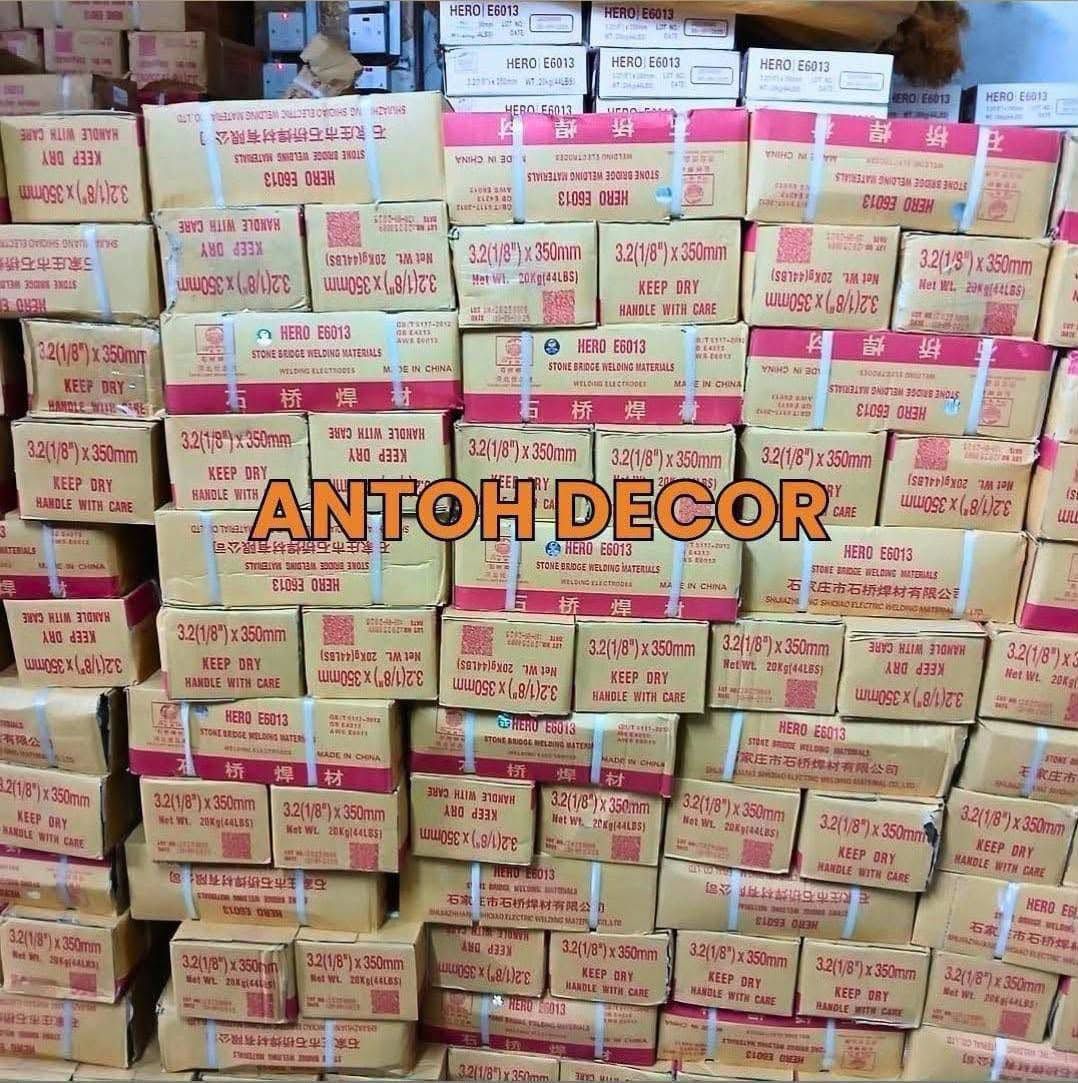
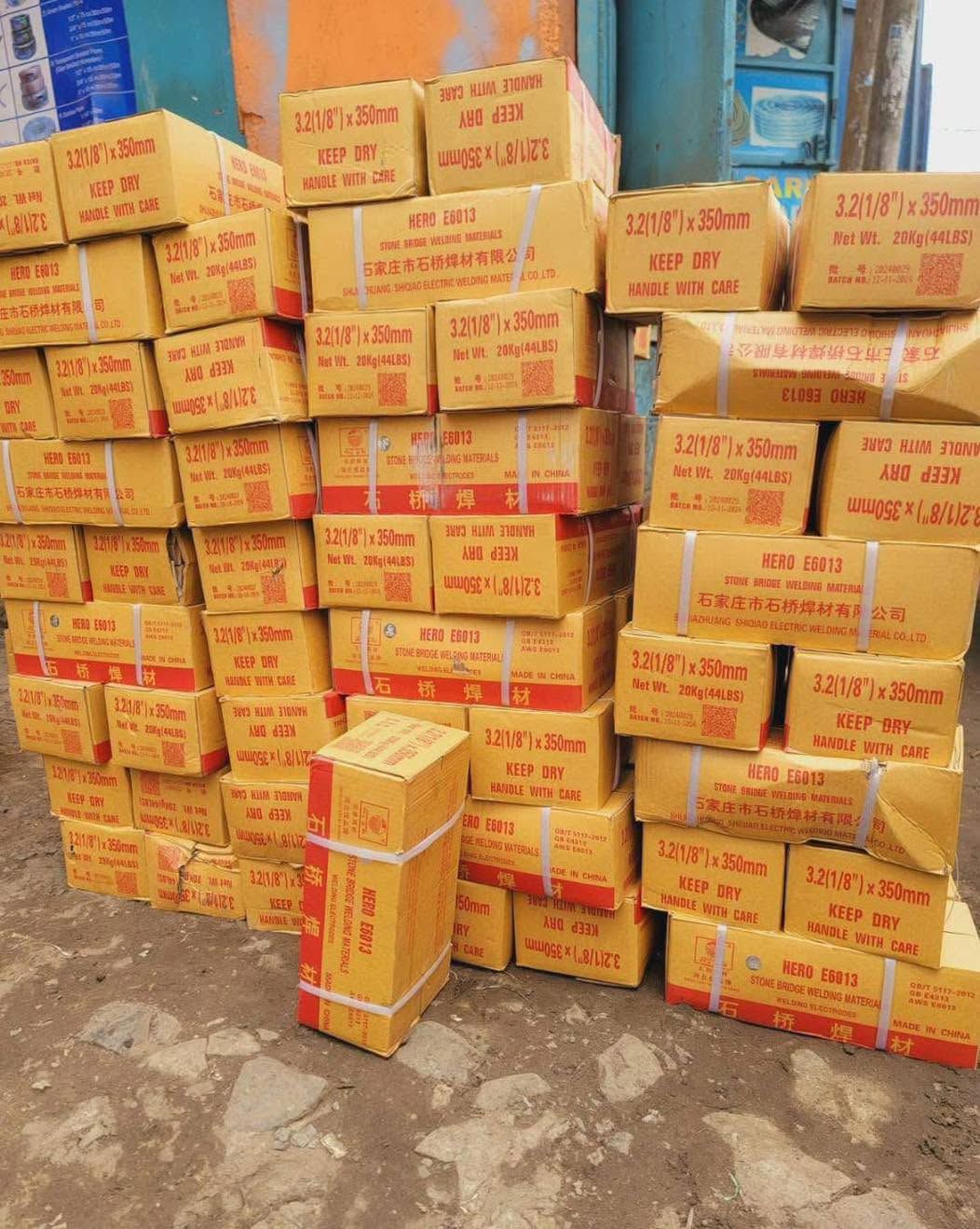
Workshops and hardware shops buy Hero E6013 by the 20 kg carton at wholesale prices. We hold large stock in Nairobi and deliver countrywide. Ask for a price on the Hero E6013 welding rods page.
Featured in this guide
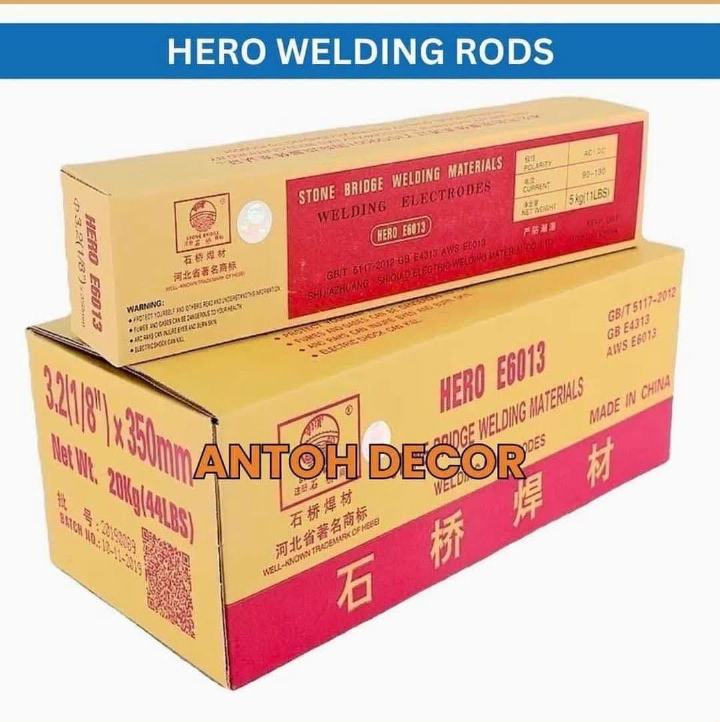
Welding & Fabrication Supplies
Hero E6013 Welding Rods (2.5 mm & 3.2 mm)
Hero E6013 welding electrodes in 2.5 mm (3/32″) and 3.2 mm (1/8″) × 350 mm, sold by the packet and by the 20 kg carton.
2.5 mm (3/32″)3.2 mm (1/8″) × 350 mm20 kg carton
Price on request · wholesale & retail
Frequently asked questions
What is an E6013 welding rod used for?
General-purpose welding of mild steel: gates, grills, frames and decorative metalwork. It works in all positions on AC or DC.
What amps should I use for a 2.5 mm E6013 rod?
Roughly 60 to 90 amps, but always follow the packet and adjust for your machine and joint.
What is the difference between 2.5 mm and 3.2 mm rods?
2.5 mm is for thin sections and decorations at lower current; 3.2 mm is for general fabrication and thicker joints at higher current.
Can I buy welding rods by the carton?
Yes, Hero E6013 3.2 mm comes in 20 kg cartons at wholesale prices.
Why do my welding rods keep sticking?
Often the current is too low or the rods are damp. Raise the amps slightly and keep rods dry.