Steel sheets & profiles By Antoh Decor Enterprises 3 min read
Key points
- Use 0.8 mm or 1.2 mm checkered plate for gate and door panels.
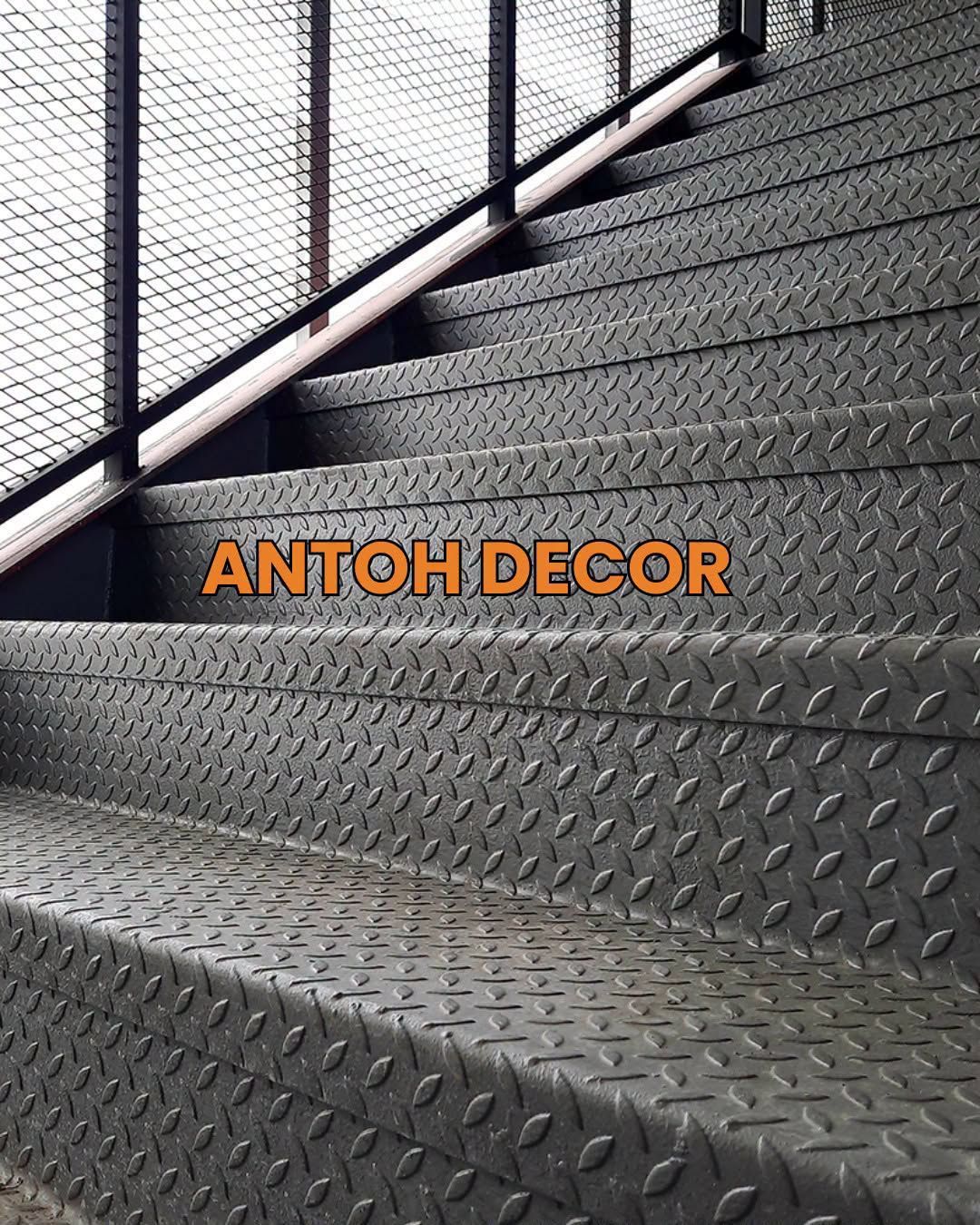
- Use 1.3 mm or 1.5 mm where strength matters, such as stair treads and floors.
- The raised pattern is decorative and anti-slip.
- Antoh Decor stocks all four thicknesses in Nairobi for wholesale and retail.
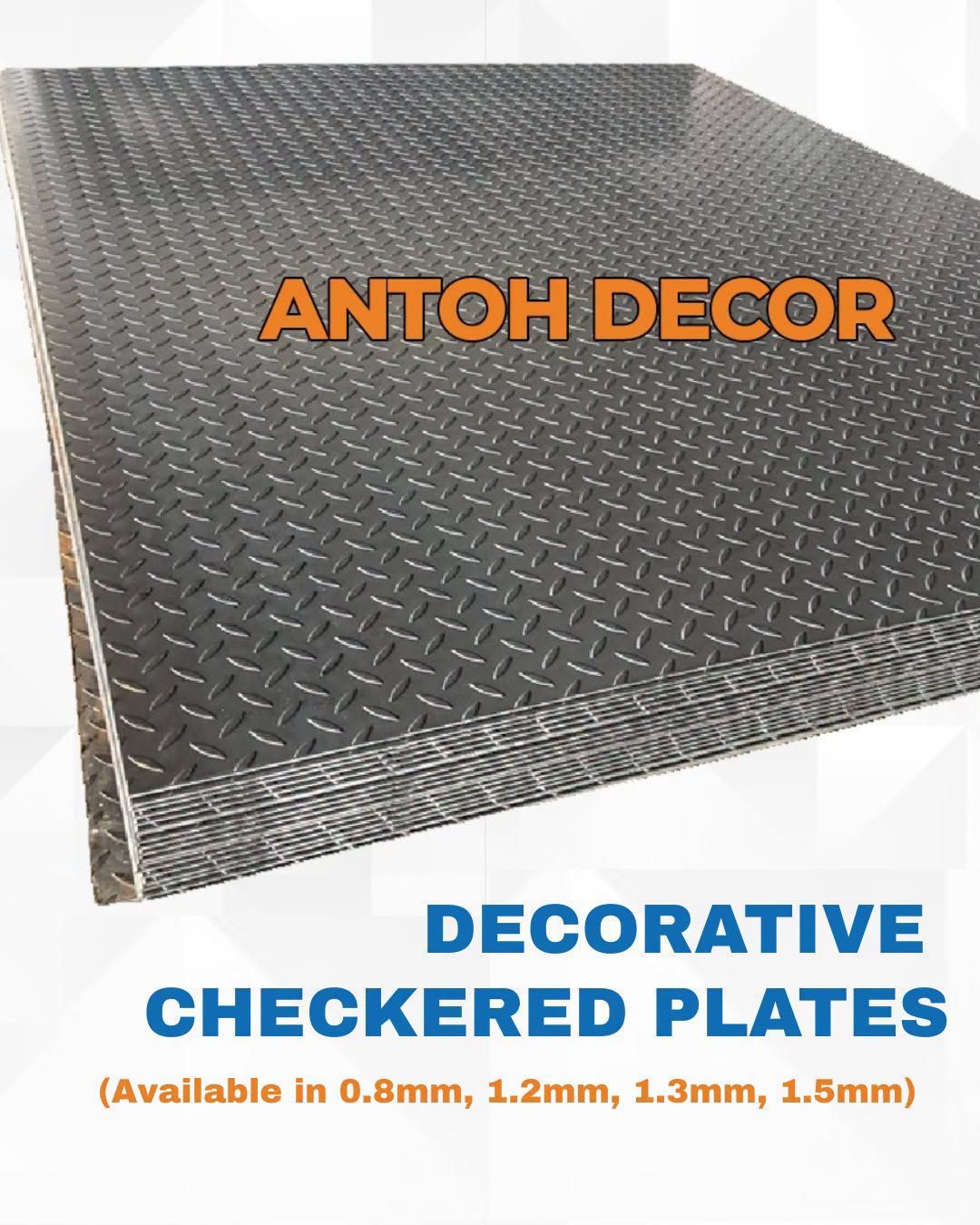
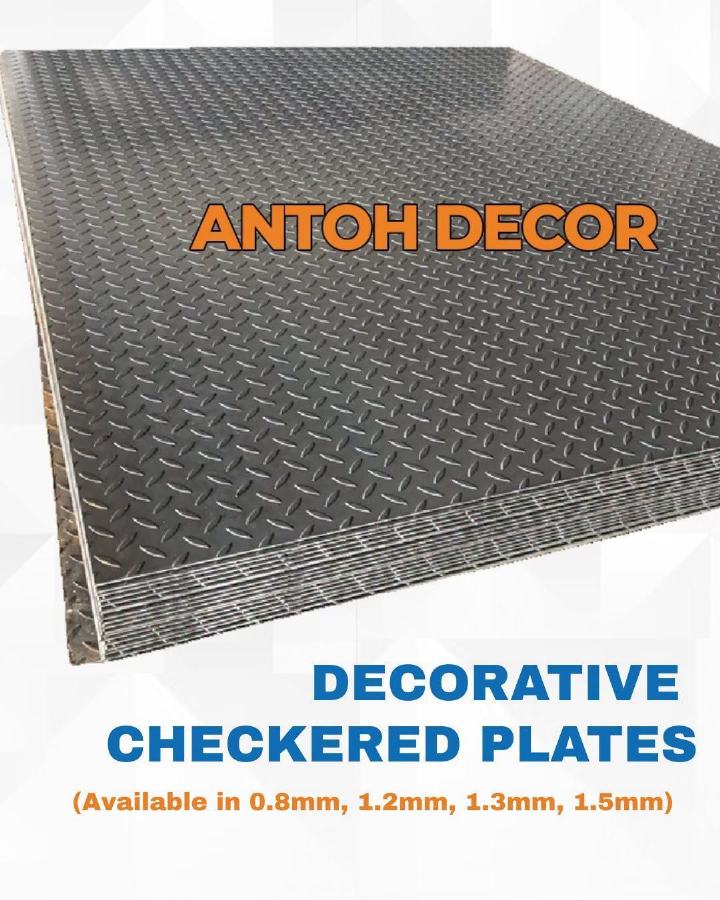
Decorative checkered plate (also called checker plate, chequered plate or diamond plate) is steel sheet with a raised pattern on one side. It is popular on Kenyan gates because it gives privacy and texture in one material, and on stairs because the pattern stops feet slipping.
Thickness guide
| Thickness | Use | Why |
|---|---|---|
| 0.8 mm | Gate panels, door cladding, decorative infill | Light and easy to cut; keeps gates light |
| 1.2 mm | Gate panels, steel doors | Stiffer, resists dents |
| 1.3 mm | Heavier doors, light stair treads | Good balance of weight and strength |
| 1.5 mm | Stair treads, landings, floors, ramps | Strongest; takes foot traffic |
For stair treads and floors, the plate must sit on a properly spaced support frame; the plate thickness alone does not make a stair safe.
Uses that work well
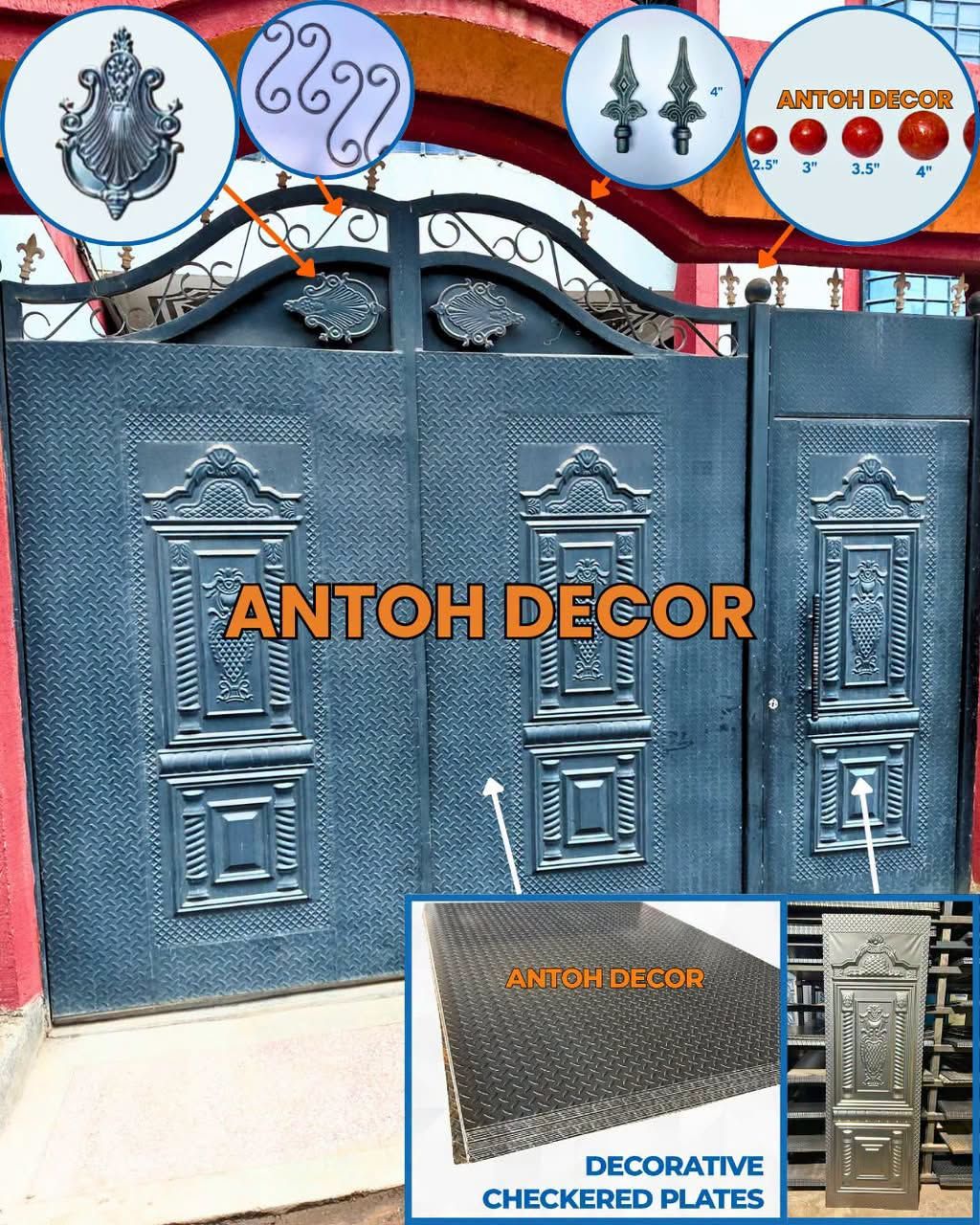
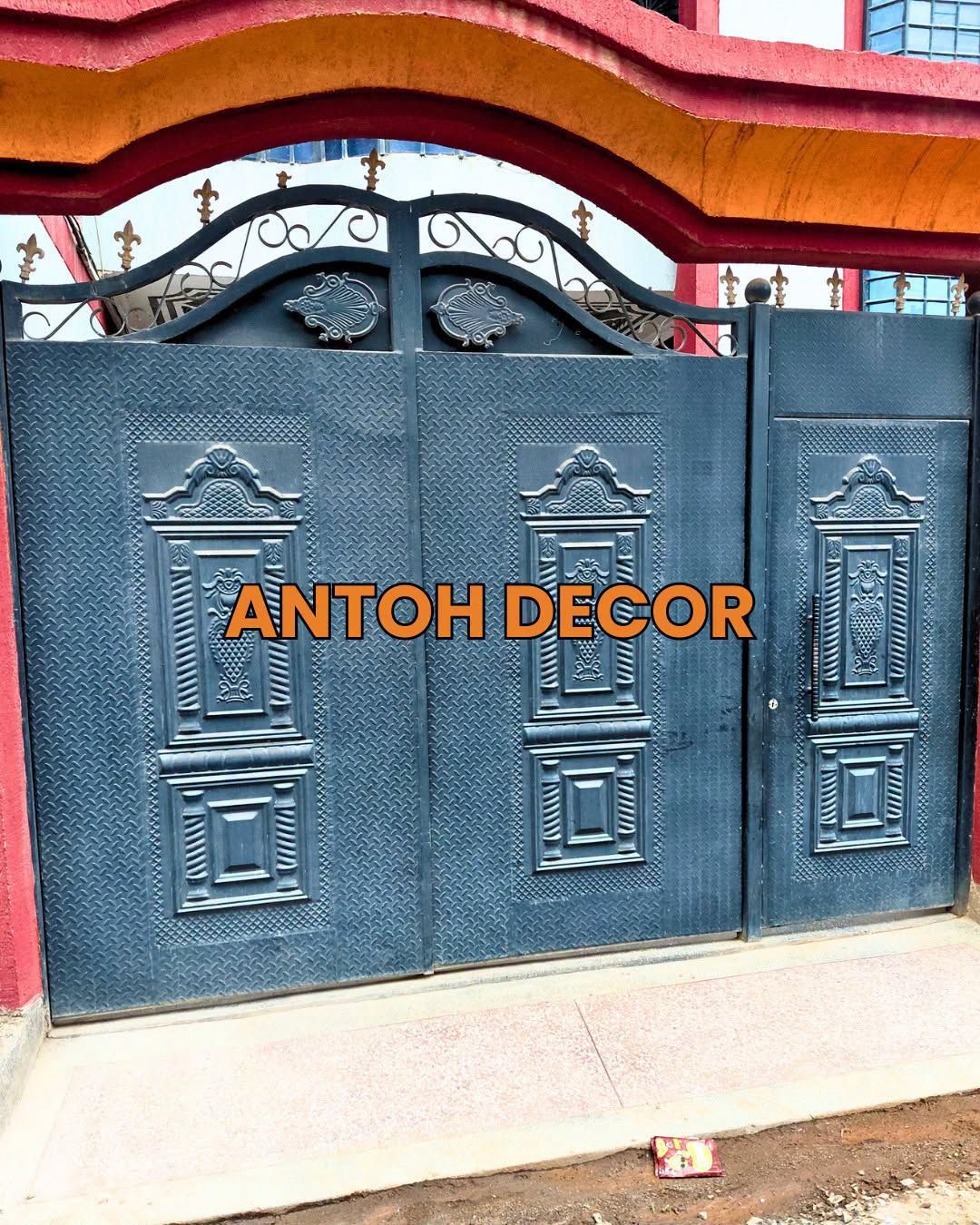
- Gates: the lower half of a gate in checkered plate gives privacy and stops dogs and children squeezing through, while bars or CNC panels above let light in.
- Steel doors: full cladding or a decorative lower panel.
- Stairs and landings: anti-slip treads on external steel stairs.
- Truck and shop floors, ramps and loading areas.
Cutting and welding tips
- Cut with a grinder and thin cutting disc, or ask about our cutting service for many pieces.
- Thin plate distorts with heat: stitch-weld in short runs and move around the panel.
- Decide which way the pattern faces before welding; on stairs the raised side faces up.
Finishing
The raised pattern looks great with a two-tone finish. Prime well and paint, or powder coat for a longer life outdoors.
How much plate do I need?
Work out the area of every panel you will clad (width × height), add them up, and add about 10% for cutting waste. Then ask us for the current sheet sizes in your chosen thickness and plan the cuts on paper, so that the pattern runs the same way on every panel and offcuts are as small as possible.
Checkered plate on gates: design tips
- A checkered lower half and an open upper half (bars, decorative pipes or CNC) is a classic Kenyan gate design.
- Keep the pattern running the same direction on both leaves.
- Frame the plate with flat bar or tube so the edges are hidden and protected.
- Add a few castings or flowers on the plate for a decorated look; see gate decoration ideas.
Common mistakes
- Using 0.8 mm on stairs or floors.
- Long continuous welds that ripple thin plate.
- Leaving the back of the plate unpainted; it rusts from behind.
See the decorative checkered plates page for a price, or compare with grooved gate sheets.
Featured in this guide
Steel Sheets, Plates & Profiles
Decorative Checkered Plates (0.8 – 1.5 mm)
Decorative checkered steel plates in 0.8 mm, 1.2 mm, 1.3 mm and 1.5 mm for gates, stair treads, doors and anti-slip surfaces.
0.8 mm1.2 mm1.3 mm
Price on request · wholesale & retail
Frequently asked questions
What thickness of checkered plate is best for a gate?
0.8 mm or 1.2 mm. Choose 1.2 mm if you want a stiffer, more dent-resistant gate.
What thickness should I use for stair treads?
1.3 mm or 1.5 mm, fixed on a properly spaced support frame.
Is checker plate the same as chequered plate or diamond plate?
Yes, they are different names for the same steel sheet with a raised pattern.
Do you deliver checkered plates outside Nairobi?
Yes, we deliver countrywide.